
Why Does Yard Drainage Matter?
The main two reasons homeowners crave quality drainage are because it protects their landscaping investment from further damage and saves them money in the long run. Here’s a better picture of what can happen.
- Poor drainage can lead to dead grass, rotting roots, lawn diseases, and more.
- Standing water attracts pests like mosquitoes and termites that can impact the health of you, your pets, and your home.
- Puddles that stick around can become an eyesore and create a foul smell, lessening your curb appeal and property value.
Clearly, each season is different, which creates a unique impact on your yard’s drainage month after month. Plus, there are extra issues with pests and fungus depending on the weather. For instance, summer thunderstorms create more opportunities for standing water and, as a result, mosquitoes.
Leaves falling off trees in autumn may clog gutters, which worsens runoff since it has fewer places to go. And winter can invite frozen ground or heavy rains, depending on your location.
Not addressing these drainage problems quickly can hurt your wallet, the aesthetic of your house, and the health of your family.
Signs You Have a Yard Drainage Problem
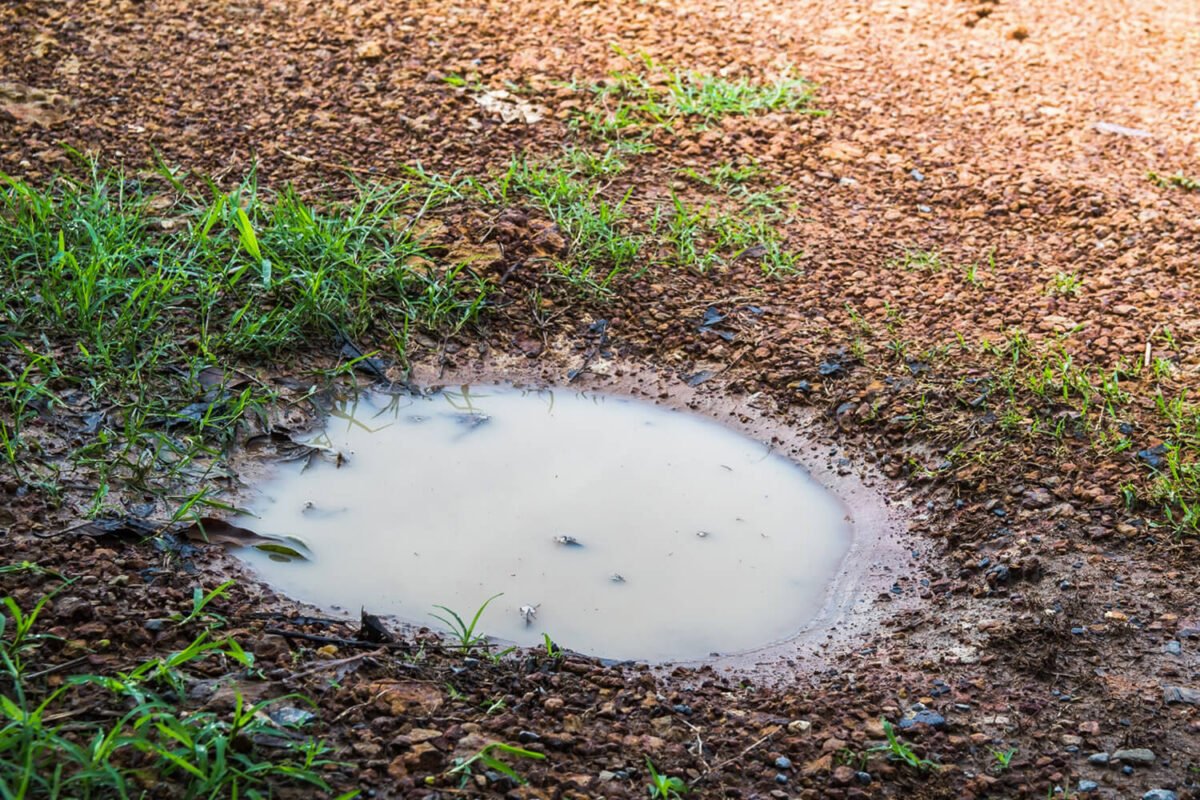
Standing Water or Puddles
Poor drainage is pretty obvious. Have you noticed puddles of water that don’t go away after a rainstorm? Once the rain stops, these water pools should naturally disappear in a few hours.Muddy Lawn
Is your grass soggy even though it hasn’t rained in a few days or more? If your grass is holding water, it probably doesn’t have anywhere for it to go. That’s a telltale sign of a yard drainage issue.
Lawn Disease
Lots of moisture can often mean lots of fungal diseases. That’s because wet conditions are ideal for outbreaks of fungi, which can cause fast-growing issues like mold, mildew, and lawn diseases.
Plants Turning Yellow or Root Rot
When plants or grass are overwatered or constantly soaked in water, they’re basically drowning. They can’t get the nutrients and oxygen that they need, causing them to turn green. Or several hours or days of rain can create root rot, which harms grass from the bottom up. That’s why it’s so important to make sure your yard is getting the correct amount of water…not too much and not too little.
Erosion & Bare Spots
Water that’s moving fast again and again can erode soil, taking important nutrients and topsoil with it that would otherwise help plants and grass grow. Bare spots, uneven terrain, exposed roots, and dangerous ditches can also result from this kind of erosion.
Remember that exactly where you live matters in what you’ll be facing.
For example, residents of the Midwest or South could deal with compaction issues more frequently because soils in those areas tend to be clay-heavy. Meanwhile, in low-lying areas such as Florida and the Gulf Coast, flooding and hurricanes inject lots of water at once. This may lead to more standing water and pest issues than in other regions.